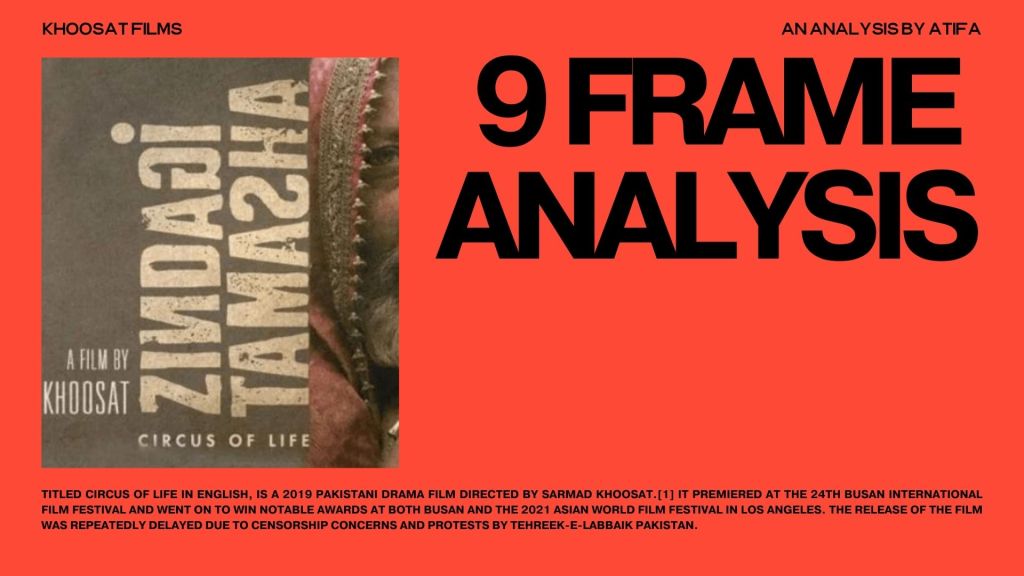
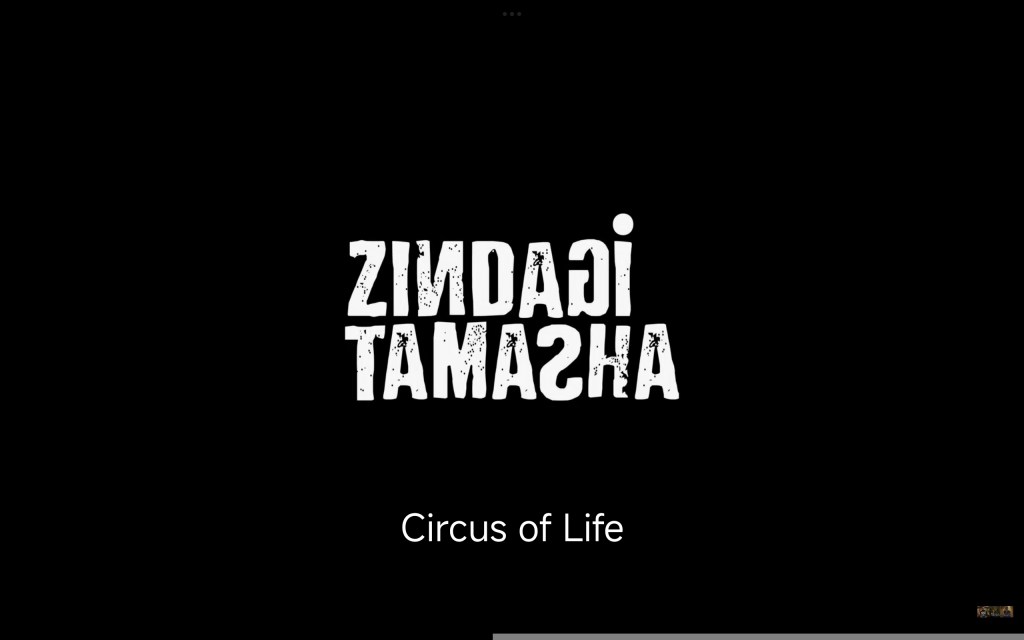
In the beginning of this film, we witness khoosat play with sound. Upon a black screen appears a title and a conversation between two individuals. The title appears to be written backwards, only seen properly through the mirror (which we learnt in 8th grade) hence, urging us to reflect. Reflect upon what? You may ask… This film highlights the hypocrisy adopted by society making it cruel for one to live.
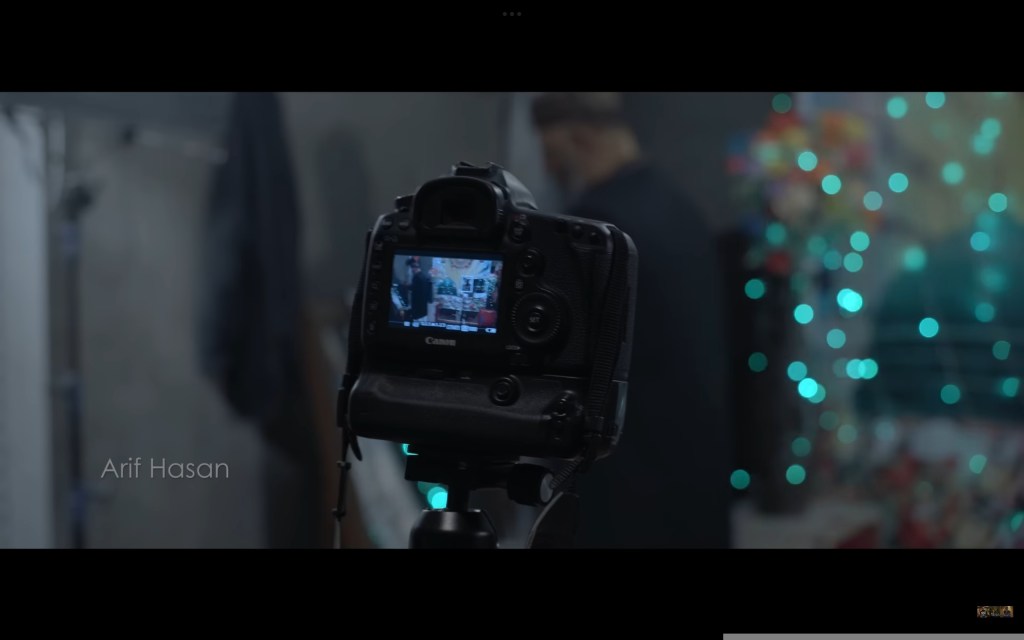
This frame from Zindagi Tamasha uses a “camera within a camera” composition to highlight the film’s central themes of surveillance, judgment, and the divide between private identity and public image. The shot focuses sharply on the DSLR’s LCD screen while leaving the actual man in the background blurred, visually suggesting that what is captured, shared, or recorded becomes more “real” and more powerful than the lived moment itself. The lowkey lighting and cool blue bokeh from the fairy lights create a quiet, introspective mood, reinforcing the emotional distance and isolation of the character who is physically present yet visually sidelined. By placing the recording device at the centre of the frame, the film comments on how society watches, documents, and ultimately judges individuals, foreshadowing how the protagonist’s personal life will later be scrutinized and weaponized through digital media. This single frame encapsulates the conflict between identity and representation, showing how a person’s humanity can be overshadowed by the circulating image that defines them in the eyes of others.
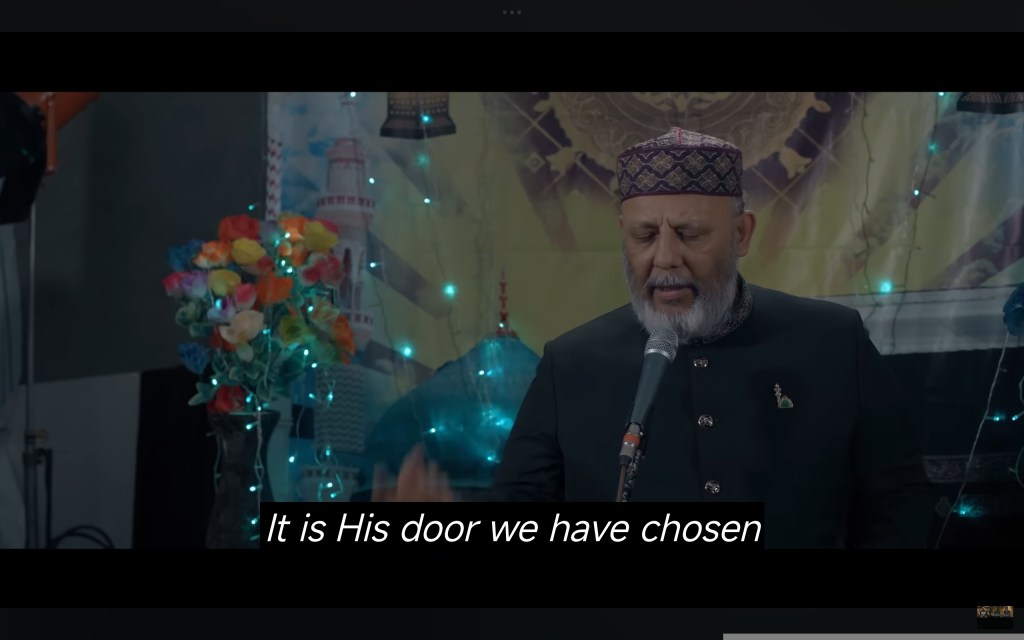
In Frame Two, the mise en scene presents a deliberately tacky and cluttered setup, filled with colourful artificial flowers, decorative props, and strands of blue fairy lights that dominate the background. These elements create a visually chaotic and overstimulating environment, reflecting the artificiality and superficiality of the space. The cool blue lighting from the fairy lights contributes to a low-key atmosphere, softening the frame while simultaneously highlighting the contrast between the vibrant props and the subdued emotional tone of the scene. As the shot unfolds, the camera slowly pans toward the protagonist, who is seen reciting a note, drawing attention away from the loud setting and towards the internal, more intimate moment of performance.
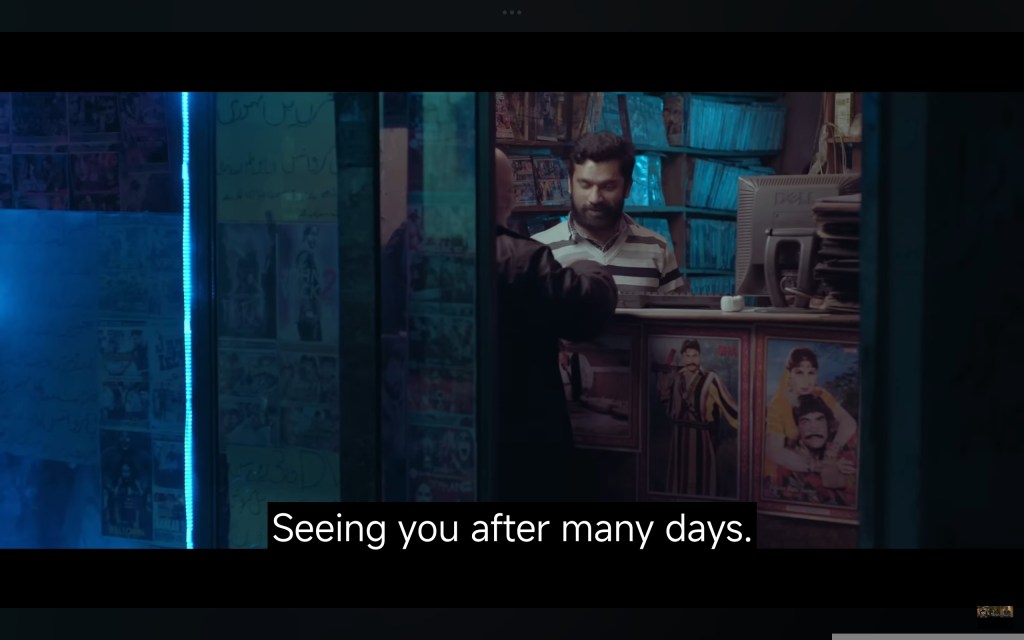
In Frame Three, the scene shifts to a small tape store filled with CDs, posters, and cheap film advertisements, immediately immersing the viewer in a contrasting world dominated by vivid pink and blue lighting. This colour contrast symbolises the internal conflict within the protagonist, the tension between his respected religious identity and his hidden fascination with dance, music, and actresses. The posters of low-budget films displayed outside the shop, along with mentions of an actress named Asiya, signal that this place represents a more indulgent, less socially accepted side of his life. The shopkeeper’s remark that he hasn’t seen the man in a long time subtly reveals that the protagonist frequently visits this place, hinting at a habitual double life. This sharp transition from a scene of him solemnly reciting a religious poem to casually browsing tapes of dancing actresses exposes the duality of his character and the gap between public perception and private behaviour. The conversation between the two men is captured through over the shoulder shots, while wider and mid level shots establish the cluttered environment, the store’s visual tone, and the uneasy coexistence of the protagonist’s two worlds.
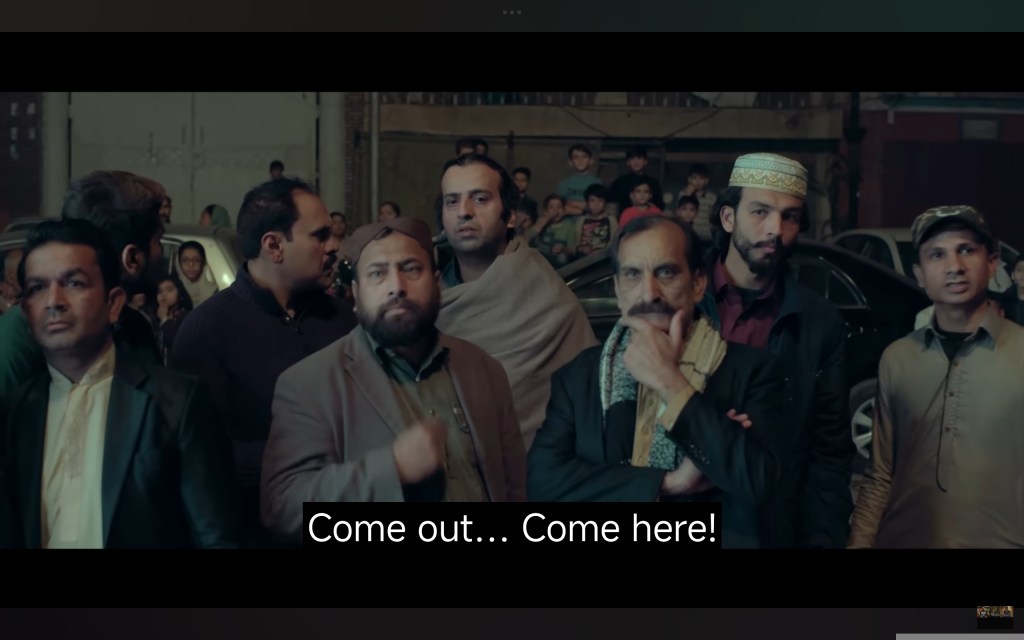
In Frame Four, the scene cuts sharply to a group of men who represent society, all staring directly into the frame in a way that momentarily feels as though they are looking straight at the audience. This direct gaze creates an immediate sense of scrutiny and tension before the following shot reveals what they are actually watching. The crowd is composed entirely of men dressed in similar traditional attire, wearing religious caps and sporting almost identical moustaches, emphasizing their collective identity and conservative mindset. The absence of women further highlights this homogenous, patriarchal environment. The mid length framing captures the entire group, allowing the viewer to absorb the uniformity of their appearance and the weight of their silent judgment. The lighting is deliberately lowkey, dominated by dark, muted shades, which strips the frame of any warmth or vibrant colour, reinforcing the seriousness and rigidity of the moment. Together, these elements position the crowd as a symbol of societal pressure, a watchful, morally authoritative force whose collective gaze foreshadows the protagonist’s fear of exposure and public condemnation.
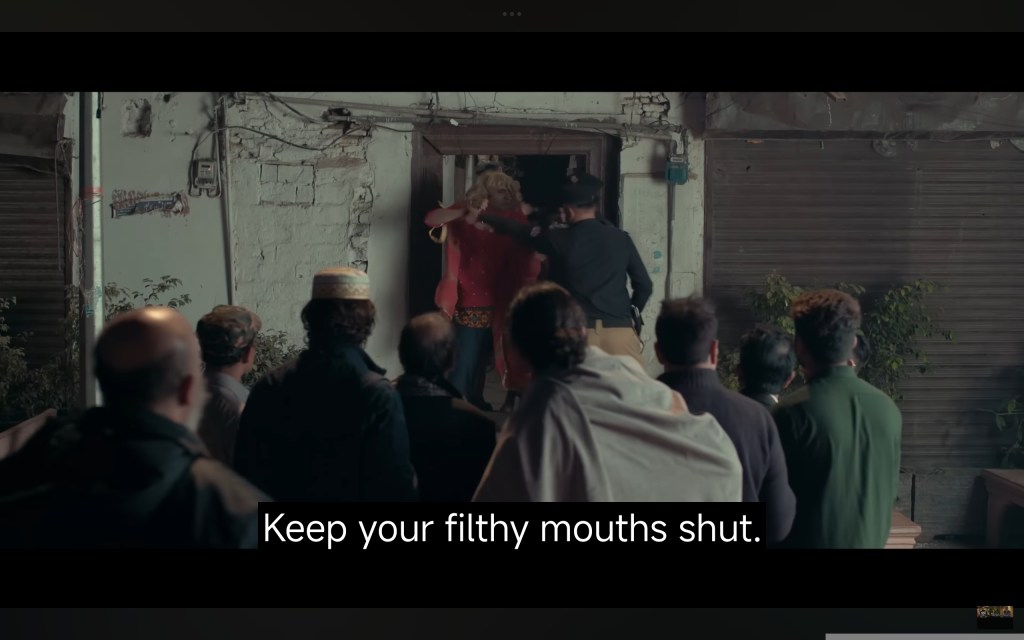
Frame 5 reveals the subject that the men in the street seemed ‘intrigued’ by. We see a mid – wide length shot which emphasizes on the environment and shows the dull and dark colours of the men that represent the society. All men are observed to be wearing a standardised ‘uniform’ looking alike. A static shot of the eunuch violently being dragged and thrown out of their own house while the rest stare expresses vulnerability and helplessness. All men seem to be entertainied by the argument. The “hijra” is the only one in the frame that wears colour dressed in a orange and green shalwar kameez with a blonde wig which is later snatched and thrown away by the police officer. Heirarchy is also shown here as the police officer who seems to be more authoritative openly disrespects the ehunch while the rest do nothing about it.
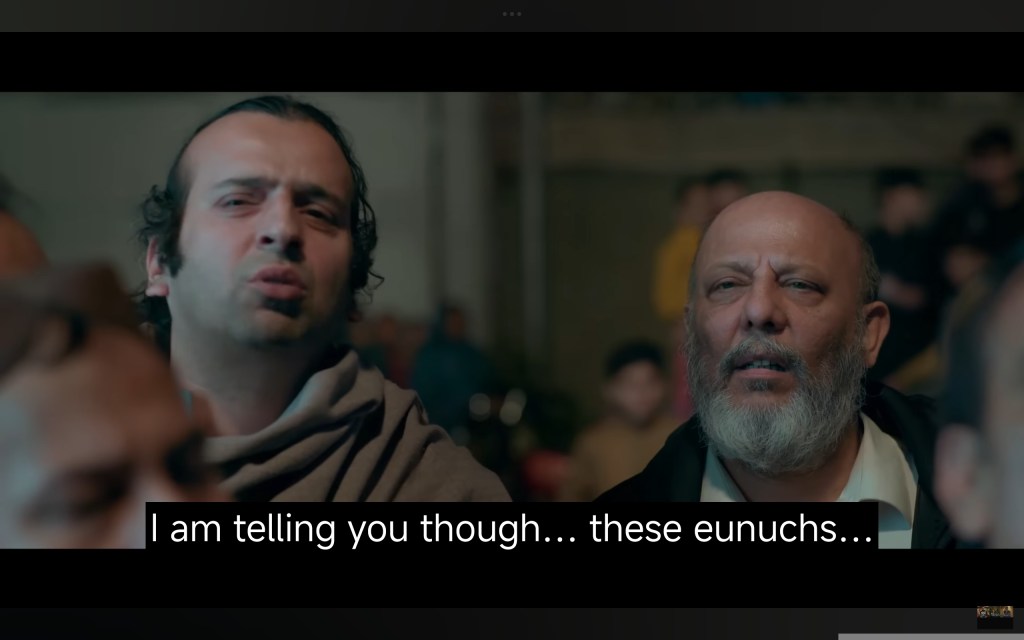
In frame 6, we observe the conversation between the two men. Here, they validate their actions by blaming the eunuchs and their behaviour and how it influences the rest of the society to sin. As the film progresses, we cover just how problematic the ‘saints’ turn out to be. The close up shot of the conversation gives us an insight on their opinion about the scene.
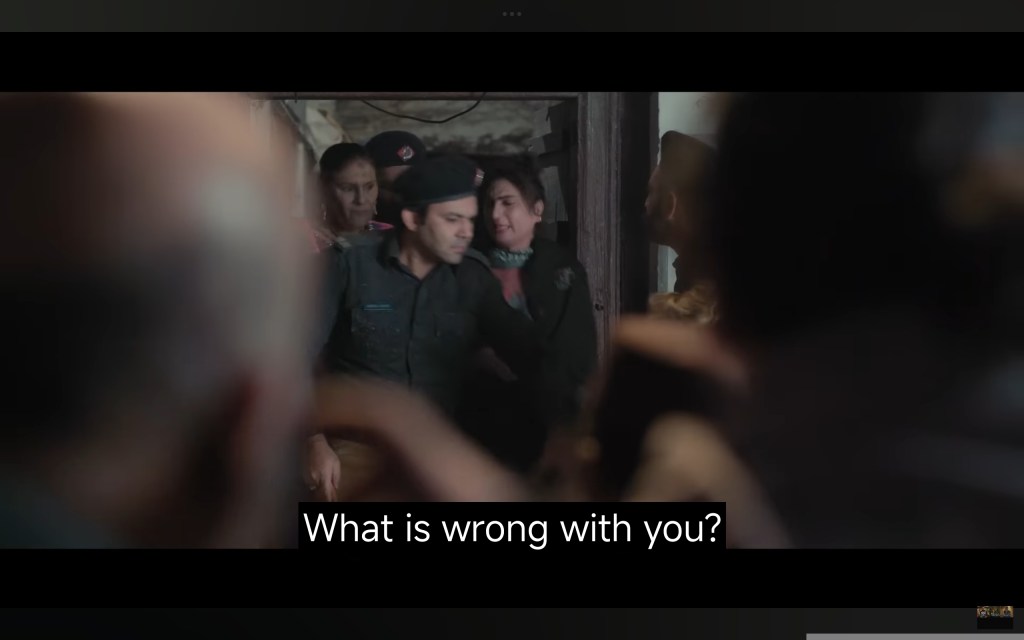
As we reach frame 7, the shot progresses from static to more handheld movement. The cuts between scenes are standardized to be smooth to keep the audiences attention towards the subjects. The purpose of placing the camera in between the audience is to give an eye level perspective of the situation and put ourselves into the scene making us a part of the society we are witnessing. We see an over the shoulder shot with handheld freestyle movement expressing the familiarity of the scene to the audience to create awareness.
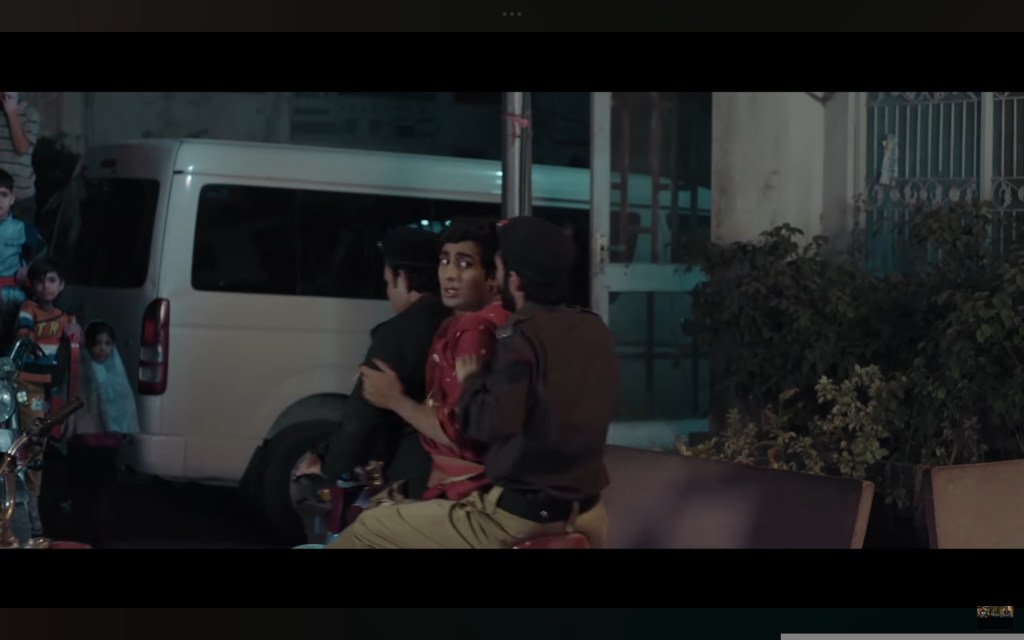
Frame 8 shows the policemen force the eunuch onto the bike as they pray whoever abuses them also has eunuch babies so they can feel the pain they feel due to their disrespect.
This frame shows a wide mid length shot also registering the children in the frame that will eventually grow up to adapt to the same ways looking up towards the men. The people appear to be lower middle class, vastly illiterate and unconscious of their own circumstances.
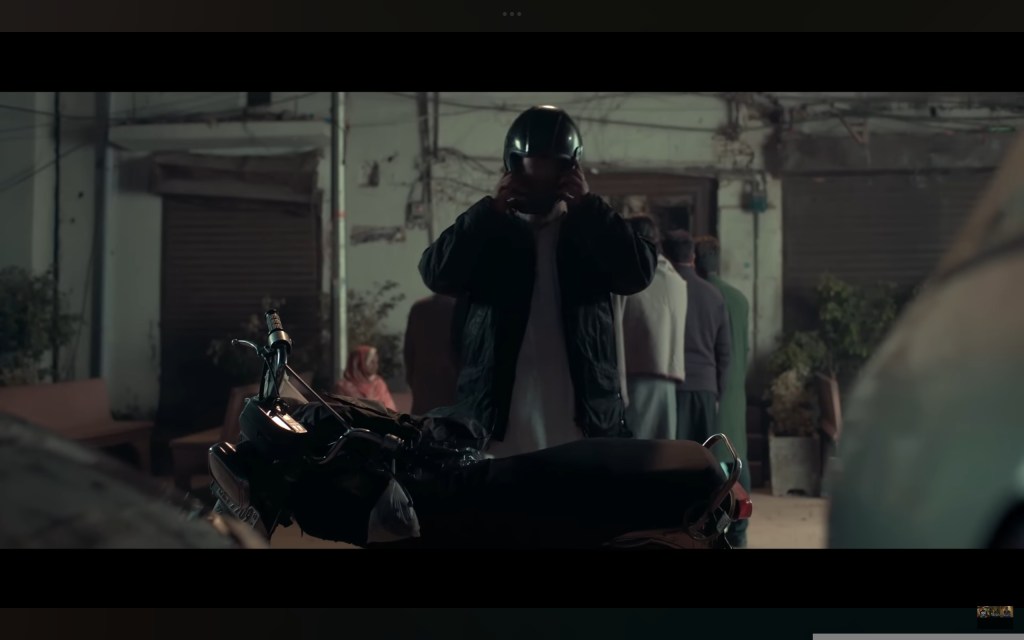
frame 9, shows the protagonist unbothered by the situation leaving the scene after the eunuch is taken away by the policemen. He sets no opinion upon what he sees and attempts to carry on as if nothing happened. This represents how common such situations are in the area. The constant use of wide length or mid length static shots acknowledges the importance of this scene as the film progresses around this exact moment. Now unbothered protagonist soon appears to be in the same situation as this. The cold behaviour of his becomes his karma eventually.
 Despair For Dummies
Leave a comment