After reading a few on this website, I have begun to realise how awfully horrible I’ve been doing with my previous analysis. So, I’d like to start off by a written apology to whoever has read the previous film opening analysis. My second proper Hollywood film after black swan and I am not disappointed. In fact, to understand the depth of Wes Anderson’s direction i had to refer to different social media platforms and books as well as scripts which has now taken me a few days to thoroughly consume.
This film was directed by Wes Anderson and won various awards including, The academy awards.
Wes Anderson, the magician creating magic on frame. His direction and unique style of narrating stories makes him stand out in the cinematic world. How so you ask? Well…
Here we go:
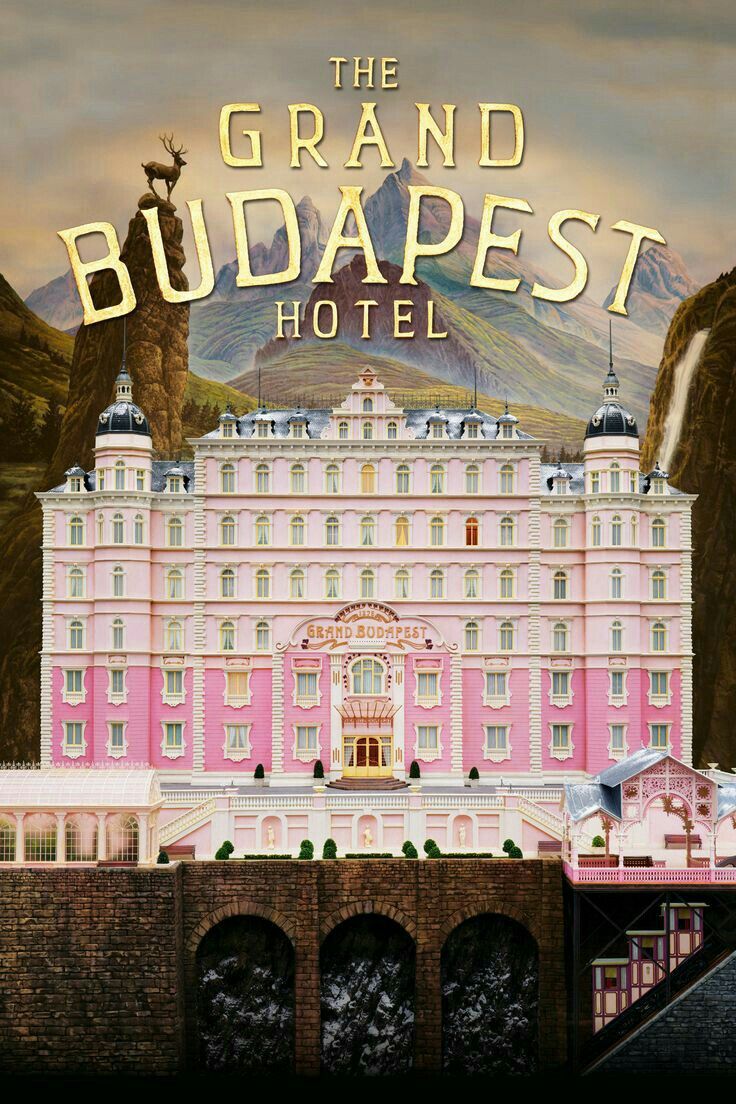
The themes and narratives introduced in the opening include; memory and storytelling, loss of old Europe and friendship and loyalty. The grand Budapest hotel is a hybrid genre film, blending genres like comedy, drama and heavy political themes. However, it can be categorised as a comedy/adventure film.
Set in 1968, The setting seems theatrical and the background appears to obviously be a made up set. The hotel looks like a cardboard box, one that you would find in the attic and once opened, shows imprints of old memories even remnants of an old hotel. The hotel is dominated by pastel pinks, reds, and purples, creating a whimsical yet nostalgic tone, symbolising that it is not a realistic world, but a heightened story book one.
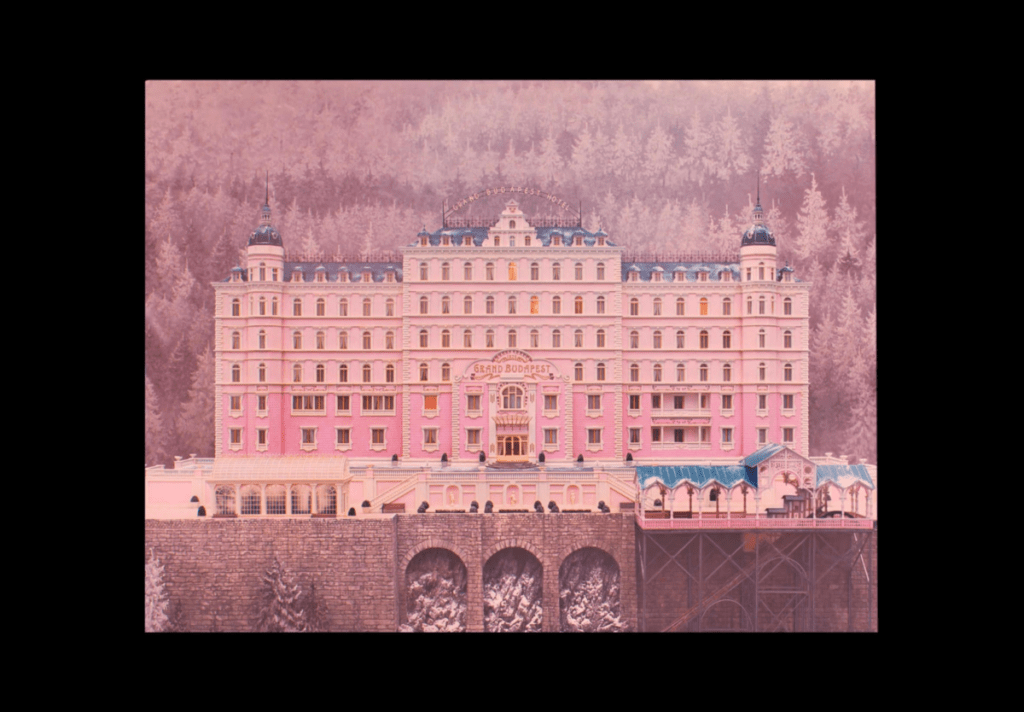
Figure 1:
the Hotel in 1930s, dominated by pastels (pink and blue in contrast). Blue highlights the hotel making it appear more attractive to the eye and keeping the focus. The windows have a slight orange hue indicating presence of visitors. Lighting seems natural.
The hotel’s architecture is symmetrical, grand, and slightly worn-out. This contrast between old luxury and faded glory hints at the hotel’s past importance and its current decline.
The story is passed on through multiple people before it arrives to us. Here, Anderson is dealing with a construction of realities so, he takes the story in layers, construction by construction.
The colours in the beginning are purple, pastel blues and whites. However, as the scene shifts colours are changed to warm autumn tones (green, yellows and reds) indicating change in seasons. Yet, it lacks the colourful and visual aesthetic previously shown. This symbolises time passing by and change of decades. This change in scenery created an ominous feeling of some underlying problems.
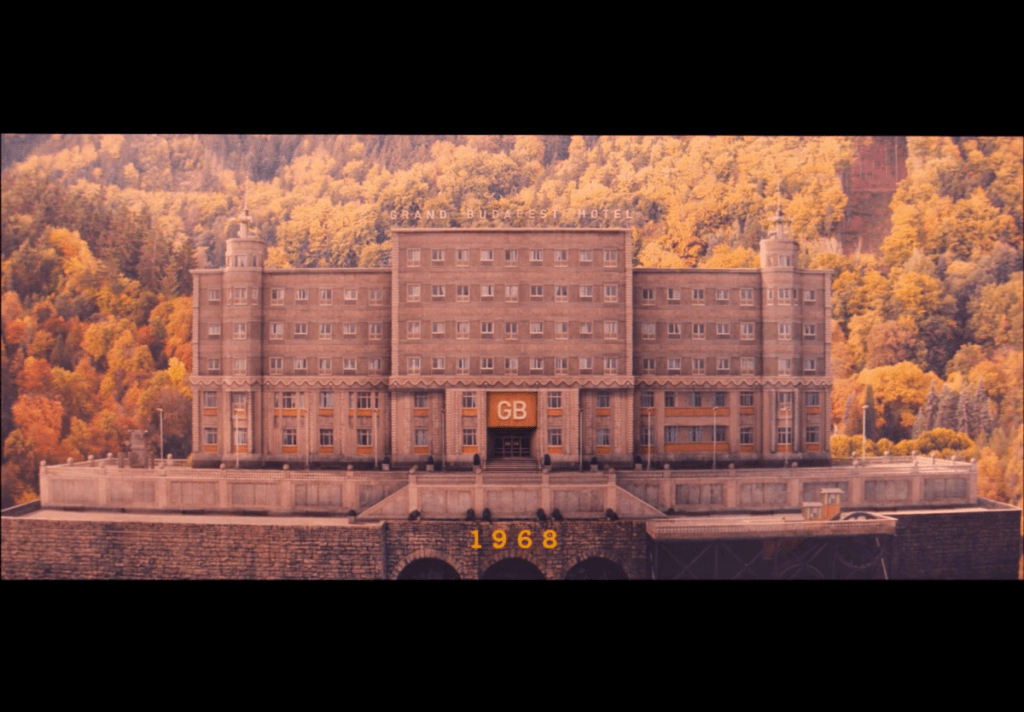
Figure 2:
The Hotel in 1968, autumn tones in the background reflecting change of season. Not as visually appealing as it was in 1930. Appears depressing and abandoned.
The narration is non digetic, a philosophical tone is set up as the narration begins with the background of the hotel and the stories formed alongside. The hotel is shown as faded and empty. Yet the characters talk as if they are in a grand, bustling establishment.
The hotel itself is introduced almost like a character huge, vibrant, and eccentric. The author says things that are blunt but delivers them in a serious, calm tone. Authors conversation are extremely refined for normal conversations speaking like Victorian noblemen adding humour in contrast to the script.
Almost every shot is centred and perfectly symmetrical, creating a sense of order and control. This visual style becomes part of the film’s humour and charm. As the film progresses, many creative and influential cinematic decisions became evident.
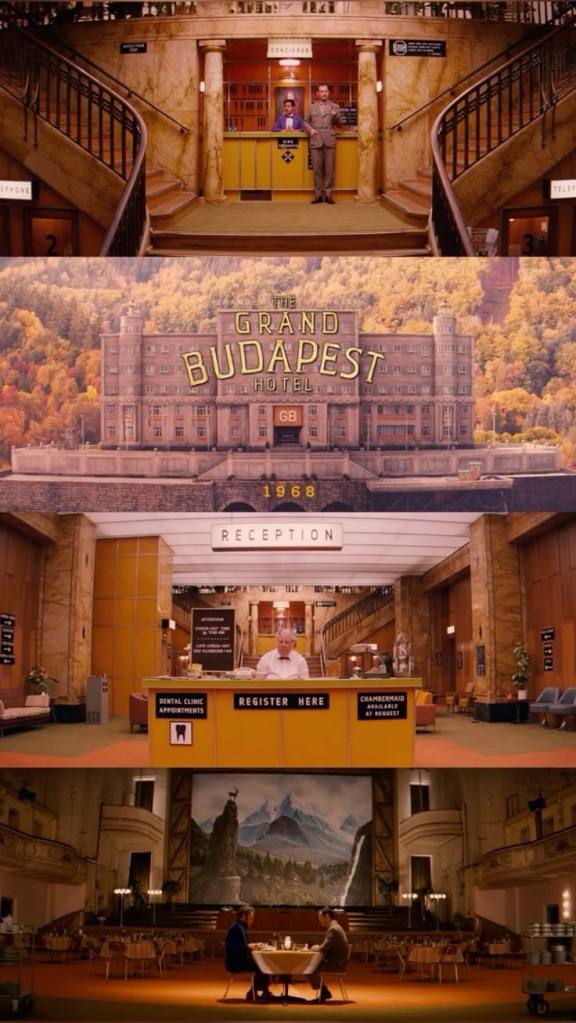
Characters are in the centre of the frame retaining attention and equal focus is set on the location. Excellent frame work to establish setting, characters and their daily routine.
Anderson uses quick, clean cuts that match the quirky pacing of the narrative. This creates a “clockwork” feel. Each time shift in film led to a different aspect ratio of the portrayal of the movie. This impacts the film by portraying a more natural shift in time. Wide shots focus on both the characters and settings to show the audience what the characters are doing and how they’re body language portrays different emotions and feelings.
He movie is divided into three time lines: 1930s, the 1980s and present time. The narrator of the the present time is revealed at the very start of the film.
Characters wear period appropriate clothing from the 1930s. The keys, large suitcases, concierge desk, and bell all reinforce the hotel setting and the old-fashioned, orderly nature of its operations.
A fast paced montage introduces the hotel staff and establishes the hotel’s routines. The contrast between stillness and sudden movement adds humour and keeps the viewer engaged. Bells ringing, doors opening, footsteps in hallways, all enhance the realism of the hotel. When the camera moves through the hotel, it reveals different characters and spaces like a dollhouse. Characters are often framed in medium shots that highlight their costumes and surroundings, making the setting feel larger than the individuals within it.
Camera pans towards different characters in the frame which highlights and adds focus onto the depressing state of the hotel, creating ironic comedy.
Characters are often on the sides or in the middle of the frame, location and setting is emphasized if not the movement of action of character. As the narrator explains the location, the frame shows an overview of what the narrator conveys making the narrative look almost like a storybook.
Jump cuts and title cards help the audience navigate the layers of storytelling.
The colour purple has often been seen dominating the frame. Purple symbolises wisdom and royalty hence, in reference to the Budapest hotel it symbolises the historical importance and depth. Despite the film having heavy political themes, Anderson intelligently manipulates colour and frames to convey the story.
I’ll be adding a link to the film opening here:
and with that,
Let us depart like true Wes Anderson characters calmly, dramatically, and with an oddly specific prop in hand.
 Despair For Dummies
Leave a comment