
Tamasha is a romantic drama with significant philosophical depth to it. Directed by imtiaz ali, the man known not just as a director but an artist who utilized camera as a medium to convey complexities and introduced a new side of cinema in bollywood. His films are mostly themed on self conflict and resistance. His other movies include; Rockstar, Laila majnu and Highway.
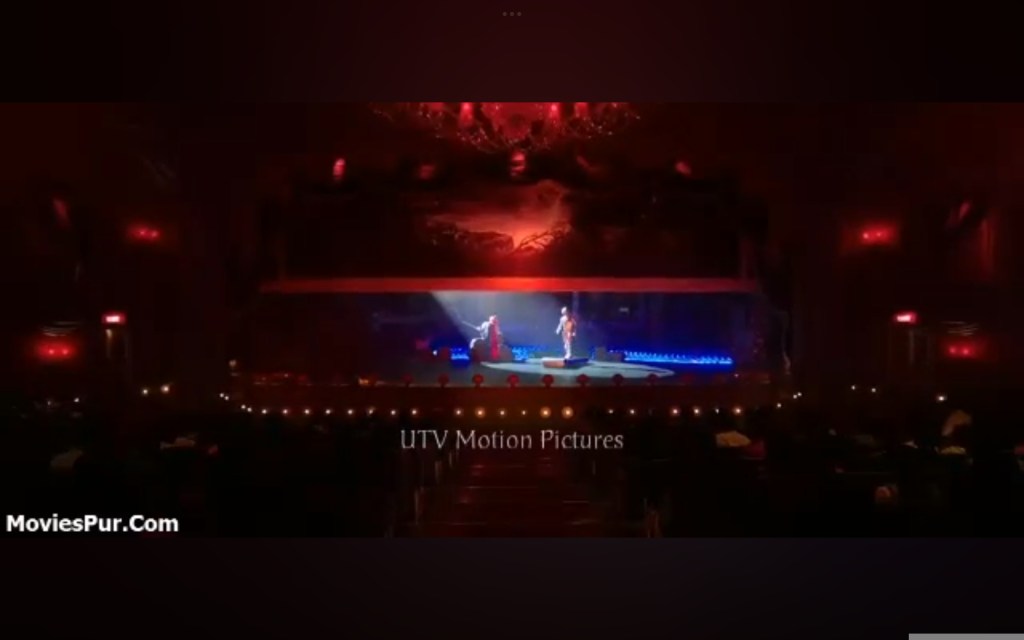
The film opens with a narrator like tone, introducing the idea that people live within fixed scripts assigned by society. The first scene opens up to a zoom in shot of the theatre emphasizing the importance of the scene. Warm, saturated lighting reflects the tone of traditional storytelling. Overhead or directional spotlight highlights both the characters.As critics have pointed out, this opening is more than a setup: it’s the film announcing that all of life is a “tamasha”, a spectacle. The contrast between the performance on stage and what we expect in real life underlines that many of our behaviors are performative.
Not many commercial films, especially mainstream romantic dramas, begin with abstract symbolism instead of concrete exposition. The opening of Tamasha is a gamble: viewers expecting conventional storytelling might get disoriented. But it achieves something deeper: it sets a philosophical tone rather than a literal one.The setting resembles a traditional narrative stage, with scenes unfolding like chapters from folklore or theatre. The mise en scène uses bright cultural colours, props, and traditional clothing, capturing the feel of classic Indian tales. Wide shots establish the environment and highlight the theatrical nature of the scenes. The film opens on a stage. We see two figures: one appears mechanical or expressionless (the robot), the other playful, loose, almost a clown or joker. The film uses metaphor to communicate its core theme. It’s a minimalist yet powerful way to introduce complexity: identity, freedom, conformity , all layered in a single stage scene Because the stage is symbolic rather than diegetic (the film’s reality), it signals that what follows will blur lines: memories, fantasy, real life myth. It primes the audience for a narrative that won’t strictly distinguish between them.
We hear digetic sounds of distorted machine as the robot walks on what seems to be a treadmil which he claims is a part of the ‘rat race’ hes ruuning. The movement of the characters is almost animated and exaggerated to show them as metaphorical characters. We also observe contrast between the colours red and blue. This contrast indicates conflict between oneself and society.
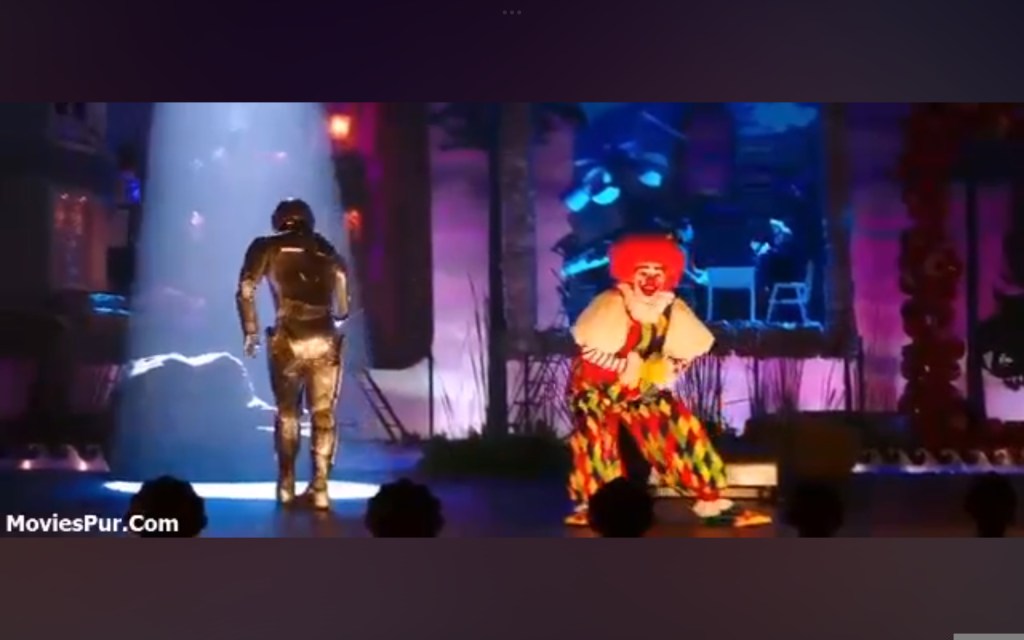
In the background, we observe different scenes pilled up and constructed onto one another in a box like manner, these scenes represent different stories that are slowly revealed during the film. The scene progresses into a wide static shot which acknowldeges the audience, spotlight and characters. Here, the robot indicates humans living in society and the clown indicates the narrator or someone who recognizes the fault in the matrix.
Elsewhere in the film, we learn that as a child, the protagonist (Ved) was deeply influenced by a storyteller, absorbing mythic tales, folk-stories, legends, romances. That childhood fascination builds a hidden inner world of stories. The stage scene foreshadows the internal conflict: the mechanical adult (robot) versus the imaginative child (clown) within Ved. The theatrical opening compresses that conflict into a symbolic summary before the story even begins. When the robot asks “Who am I?” and the joker claims to know, it reflects a central tension of the movie: people are often assigned identities by culture, society or upbringing, but their true selves might lie elsewhere. The clown proceeds to press the red button shaped heart on the robots chest which sends him in a state of conflict, chaos and he blurts out all dialogues related to ones heart and goes into a mechanic error. This is Veds internal self attempting to wake up the adult Ved. The clown’s touch reminds the robot of the forgotten heartbeat of storytelling. The set seems as if it breaks down and the robot steps down from the treadmil and seems to have loosen control.
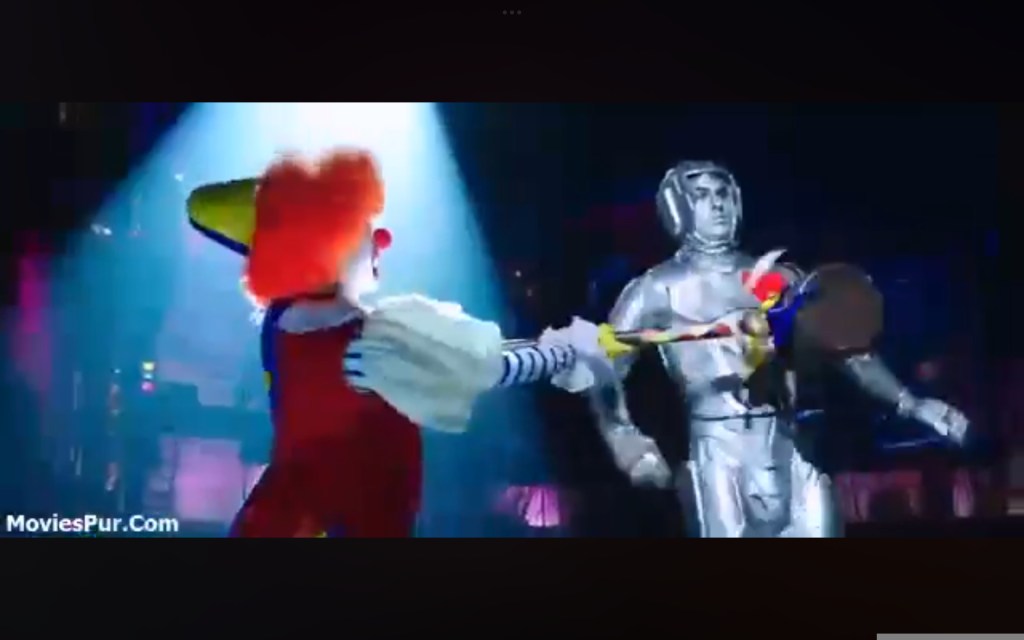
The editing is rhythmic and patterned, intentionally repetitive. The scene smoothly cuts in between the clown and robot showing the conversation. The wide shot as the stage breaks down puts audiences focus on the frame, the rest of the background turns dark with a hue of red while the spotlight remains on to two versions of Ved; the robot and the clown. Imtiaz ali has a signature focus during his movies on the true self vs the socially-installed self. For him: Love is not the fulfillment, it is the disruption that forces you to face your inner contradictions.
Heres the link for the opening: https://youtu.be/0OQ8IHVSp2g?si=3jJWJswluJUIVqJj
Our story ends here… until we decide to improvise the next scene.
Cut. scene over.
 Despair For Dummies
Leave a comment